




Original Article - Year 2026 - Volume 41Issue 1
"Photoguide" for Telemedicine - Mobile Application for Patients to Capture Technically-Standardized Photographs and Share Them with Their Doctors
"Photoguide" para telemedicina - Aplicativo móvel para captura de fotos com padrão técnico por pacientes e compartilhamento com seus médicos
Leonardo Montenegro Matos Albuquerque1, ; Elaine Kawano Horibe1; Sheila Souza Sales1; Angelica Cardoso Martins1; Fernanda Feijoeiro1; Fernando Santos Osorio2
ABSTRACT
Introduction Photographs aid in the communication between doctors and patients in telemedicine. Currently, the use of messaging applications to send photographs presents several issues, including a lack of consent, security and privacy concerns, as well as the absence of proper documentation in medical records and poor image quality.
Objective To develop a mobile application that enables patients to capture technically- standardized photographs and easily share them with their doctors during telemedicine consultations.
Methods Prior art research and literature review guided the development of the application using the design-thinking technique. We interviewed doctors and patients about the problems to be solved. The application developed underwent usability testing to improve the final version that was delivered.
Results In the prior art research, we did not find any applications designed for patients to standardize their own photographs. We interviewed 10 doctors: 80% received photographs several times a week, 90% considered images important in decision-making, 100% used WhatsApp (Meta Platforms, Inc.), and, although 100% considered obtaining consent important, 90% rarely did so. The quality of photographs was deemed important by 90% of the doctors. Of the 11 patients interviewed, 64% often sent images to their doctors, and 90% viewed them as significant.WhatsApp was the most used application. The problems mentioned included lack of security, low quality, framing, and focus. Brainstorming among researchers, doctors, and programmers guided the prototyping, validation, and development of the application.
Conclusion The Photoguide application was developed and delivered.
Keywords: telemedicine; mobile applications; reference standards; body image; computer security
RESUMO
Introdução O uso de fotografias auxilia a comunicação entre médicos e pacientes na telemedicina. Atualmente, o uso de aplicativos de mensagens para envio de fotos traz problemas como a falta de obtenção de consentimento, a falta de segurança e de privacidade, a ausência de registro adequado em prontuário médico e a má qualidade das imagens registradas.
Objetivo Desenvolver um aplicativo móvel para captura de fotos com padrão técnico por pacientes e compartilhamento com seus médicos para uso em telemedicina.
Métodos Busca de anterioridade e revisão de literatura nortearam o desenvolvimento do aplicativo pela técnica de design thinking. Foram entrevistados médicos e pacientes para definir os problemas a serem solucionados. O aplicativo desenvolvido foi submetido a testes de usabilidade para aprimoramento da versão final que foi entregue.
Resultados Na busca de anterioridade, não foram encontrados aplicativos voltados para a padronização de fotos pelo próprio paciente. Foram entrevistados 10 médicos: 80% recebiam fotos várias vezes por semana, 90% consideravam importantes as imagens na tomada de decisões, 100% usavam WhatsApp (Meta Platforms, Inc.) e, apesar de 100% considerarem importante obter consentimento, 90% raramente o faziam. A qualidade das fotos foi considerada importante por 90% deles. Dos 11 pacientes entrevistados, 64% enviavam fotos aos médicos com frequência, e 90% consideravam as imagens muito importantes. O Whatsapp foi o aplicativo mais utilizado. Falta de segurança, baixa qualidade, enquadramento e foco foram os problemas definidos a serem solucionados. Brainstorming entre pesquisadores, médicos e programadores guiou a prototipação, a validação e o desenvolvimento do aplicativo.
Conclusão O aplicativo Photoguide foi desenvolvido e entregue.
Palavras-chave: telemedicina; aplicativos móveis; padrões de referência; imagem corporal; segurança digital
Introduction
Telemedicine has become an essential tool for remote medical care, enabling the connection between patients and healthcare professionals without the need for physical presence.1 One major challenge of telemedicine is the inability to perform complete physical examinations, which are essential for accurate diagnoses and monitoring of medical conditions. In this context, patients sending photographs to their care team has emerged as a valuable solution.2 However, this approach’s effectiveness is often compromised by low-quality images, which can adversely affect diagnostic accuracy and treatment planning.3–5
While sharing photographs digitally is common, it presents complex issues regarding patient consent, data security, privacy, image storage, and the potential inclusion of images in medical records. While some solutions for monitoring chronic wounds use digital images, they often focus on healthcare professionals and overlook the needs and capabilities of the patients.6–16
Objective
The present study aimed to describe the development of a mobile application for patients undergoing plastic surgery and dermatological care. The application provides easy-to-follow guides to capture technical images and facilitates their sharing with doctors during telemedicine consultations.
Methods
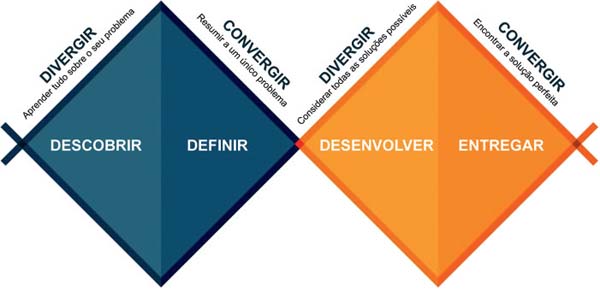
The Research Ethics Committee at Universidade Federal do Estado de São Paulo (UNIFESP) approved the current descriptive study, which employed the design-thinking (DT) methodology,17 which, in turn, encompasses four stages: discover, define, develop, and deliver (►Fig. 1)
Discover Stage
This stage included the Desk research, as well as interviews with doctors and patients.
Desk research
The Desk research consisted of a literature review and prior art research. We conducted queries on the MEDLINE, SciELO, and LILACS databases, as well as on search engines and application stores, using the keywords mobile application for standardized medical photograph and their translation in Portuguese (aplicativo móvel para fotos médicas padronizadas).
Interviews with doctors
We interviewed plastic surgeons and dermatologists with more than 5 years of experience. The questions addressed the frequency at which they received photographs, the importance of these images in medical decision-making, and the challenges related to photo safety and quality.
Define Stage
The main issues identified by the researchers in the previous stage were used to define the problem that the tool under development should solve.
Develop Stage
The product-development process included three stages: prototyping, validating the prototype, and developing the application.
Results
Discover Stage
Desk research
Literature review
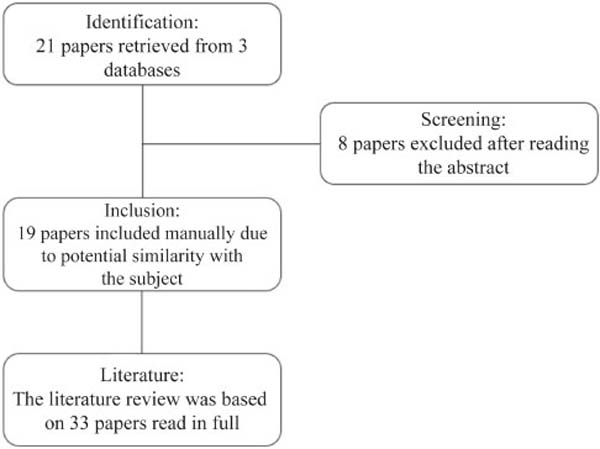
The literature review retrieved 21 articles from PubMed; however, the query on the SciELO and LILACS databases found no articles. After the exclusion of 8 articles, 19 papers were included based on suggestions from the Sciwheel (Technology from SAGE) reference management application. In total, the researchers read 32 articles in full for the review (►Fig. 2).
Prior art research
► Table 1 compares the applications evaluated in the prior art research.
| Functions | Image capture | Wound measurement | Consumables | Wound classification | Body area | Record integration | Patient-focused | Telemedicine |
|---|---|---|---|---|---|---|---|---|
| Names | ||||||||
| imitoWound (imito AG/ imito.io) | X | X | X | X | X | |||
| WoundDesk (Wound Care) | X | X | X | X | ||||
| inSight (EKARE INC) | X | X | X | X | X | |||
| Tissue analytics (www.tissue-analytics.com) | X | X | X | |||||
| WoundZoom Perceptive (www. perceptivesol.com) | X | X | ||||||
| Digitize Wound Mgmnt lp.healthy.io | X | X | X | |||||
| Silhouette | X | X | X | X | X | |||
| Swift Skin and Wound (Aranz Medical) | X | X | X | X | ||||
| Sis-Mf Unifesp (UNIFESP) | X | X | ||||||
| SAMUV (IFBA) | X |
Abbreviations: SAMUV: Support for the Treatment of Venous Ulcers; sis-MF: wound monitoring system.
Interviews with doctors
The main findings were the following (►Table 2):
| Question | Totally agree | Agree | Neutral | Disagree | Totally disagree |
|---|---|---|---|---|---|
| 1-How often do you typically receive photographs from patients digitally (via apps, email, or other means) for medical advice and decision-making? | 10.00% | 70.00% | 20.00% | 0.00% | 0.00% |
| 2- How important is receiving photographs of the patient when making decisions during a remote medical consultation? | 50.00% | 40.00% | 0.00% | 10.00% | 0.00% |
| 3- What is the importance of obtaining consent and receiving and securely storing patient information and photographs? | 100.00% | 0.00% | 0.00% | 0.00% | 0.00% |
| 4- How often do you obtain consent before receiving these photographs (Do you formally request, either in writing or verbally, that the patient confirms they understand the risks of sharing sensitive health data, such as their personal images)? | 0.00% | 10.00% | 0.00% | 10.00% | 80.00% |
| 5- How do you assess the security and privacy of photographs received through the aforementioned digital means (for instance, the risk that a photo sent by a patient could be viewed by someone other than the doctor or professional on the team caring for them)? | 0.00% | 30.00% | 30.00% | 30.00% | 10.00% |
| 6- How significant is it to obtain high-quality, technically-sound photographs during this type of service? | 70.00% | 20.00% | 0.00% | 10.00% | 0.00% |
| 7- How often does the poor quality of the photographs received hinder diagnosis and the course of action to be taken (for instance, not being able to identify the anatomical region being treated in the photo due to inadequate framing, low lighting, background obstructing the foreground, lack of focus etc.)? | 10.00% | 40.00% | 20.00% | 20.00% | 10.00% |
| 8- What interest would you have in using a specific application that helps patients capture technically-standardized photographs to send to you securely? | 40.00% | 30.00% | 20.00% | 10.00% | 0.00% |
Frequency and significance: 80% of doctors received patient photographs several days a week. For 90%, these photographs are important or very important in decision-making.
Delivery methods: Most photographs were sent through WhatsApp (Meta Platforms, Inc.).
Security and privacy: Although all doctors deemed photo security important, only 10% of them routinely obtained formal consent from the patients.
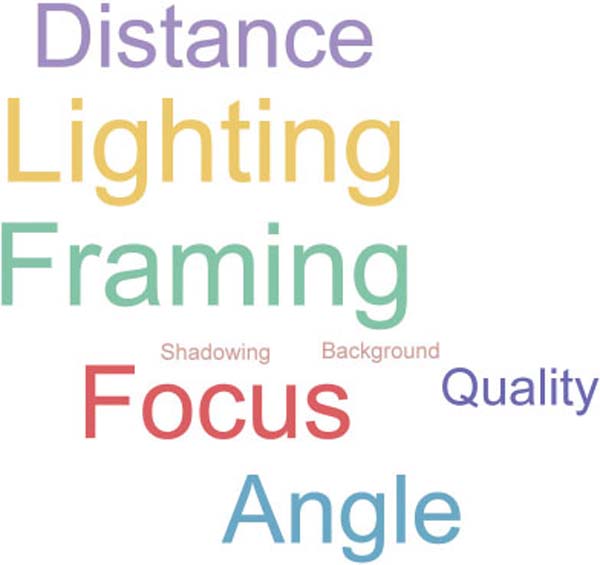
Photo quality: For 90% of the doctors, photo quality is crucial. Frequent problems include poor framing, inadequate focus, and poor lighting (►Fig. 3)
Desired features: The doctors suggested features such as masks to guide image capture and a secure system for storage and sharing.
Interviews with patients
The main findings were the following (►Table 3):
| Questions | Totally agree | Agree | Neutral | Disagree | Totally disagree |
|---|---|---|---|---|---|
| 1. How often do you send photographs of areas of your body that have been operated on or are undergoing treatment to your doctor (or their team) digitally (via WhatsApp, email etc.)? | 0.00% | 18.18% | 18.18% | 27.27% | 36.36% |
| 2- How important is it to send photographs to your doctor (or their team) during the postoperative follow-up of your surgery? | 72.73% | 18.18% | 9.09% | 0.00% | 0.00% |
| 3- How do you assess the security and privacy of photographs sent through the aforementioned digital means (for instance, the risk that a photo sent by a patient could be viewed by someone other than the doctor or professional on the team caring for them)? | 45.45% | 9.09% | 36.36% | 0.00% | 9.09% |
| 4- How would you rate your ability/skill in taking good-quality photographs of yourself to send to your doctor (or their team)? | 54.55% | 18.18% | 27.27% | 0.00% | 0.00% |
| 5- How often has the doctor (or their team) requested that new photographs with different characteristics be sent because the initially photographs sent were not of good quality (for instance, closer, further away, from a different angle)? | 18.18% | 0.00% | 0.00% | 18.18% | 63.64% |
| 6- How significant is it to obtain high-quality, technically-sound photographs during this type of service? | 50.00% | 50.00% | 0.00% | 0.00% | 0.00% |
| 7- How interested would you be in using a specific application on your phone that would help you take photographs more easily to send to your doctor (or their team) securely? | 60.00% | 20.00% | 20.00% | 0.00% | 0.00% |
Frequency of sending: 64% of the patients sent photo-graphs frequently, several times a week.
Significance and security: Most patients believed it is important to send photographs to the doctor and rated the security of the digital means used as reasonable.
Ease of capture: Most patients found it easy to take good photographs, but many have faced problems with the image quality.
Interest in specific applications: In total, 80% of the patients expressed interest in an application to help capture high-quality and secure photographs.
Define Stage
This stage examined the following key challenges identified through the interviews and the Desk research:
Security and privacy: The need for robust protection for patient data and images.
Image quality: The importance of ensuring that photographs meet an adequate technical standard.
Ease of use: The significance of an intuitive and accessible application.
Storage and access: The need for efficient organization of images and integration with medical records.
Develop Stage
Prototyping
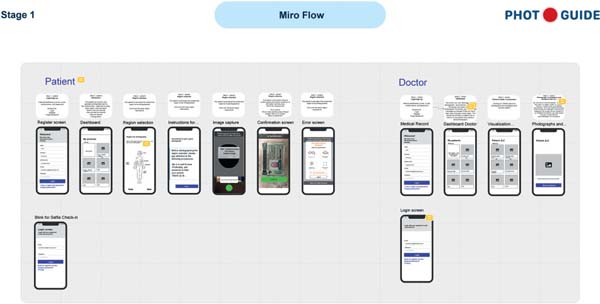
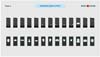
Prototyping involved creating an initial mock-up (►Fig. 4) and developing a navigable prototype using the Figma (Figma, Inc.) platform. The prototype included:
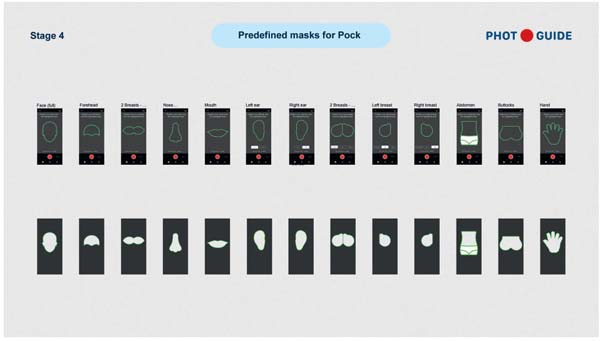
Capture masks: Masks designed to guide patients in capturing images from specific body areas (►Fig. 5).
Classification and archiving: Image archiving and organization system based on body segment, procedure date, and photo date.
Prototype validation
The prototype test assessed the functionality of the masks, the image-capture system, and the user interface. The suggested improvements were integrated before the final development.
Application Development
The application was developed for the Android (Alphabet Inc.) platform, using React Native for the front-end and Node. js for the back-end. The web dashboard was created to enable doctors to view the images. Security measures and compli-ance with the Brazilian General Data Protection Law included accepting a consent form, using code obfuscation, and implementing secure-storage technologies with data back-ups to prevent leaks of sensitive patient data.
Deliver Stage
Usability test of the tool
The first viable version of the application and web dashboard was made available to doctors, nurses, medical students, and patients for testing and use. Subsequently, a questionnaire was administered to evaluate its applicability. We recorded responses from 17 patients who evaluated the usability of the application and 10 doctors who assessed both the application and the web dashboard. The results were as follows:
Usability test of the tool by patients
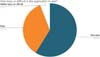
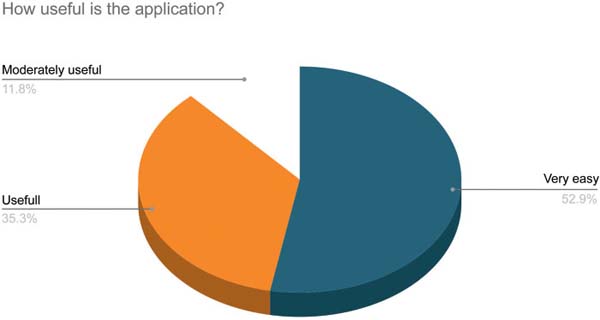
More than 94% of the patients reported that using the application is easy or very easy (►Fig. 6). In total, 80% deemed the application useful or very useful (►Fig. 7).
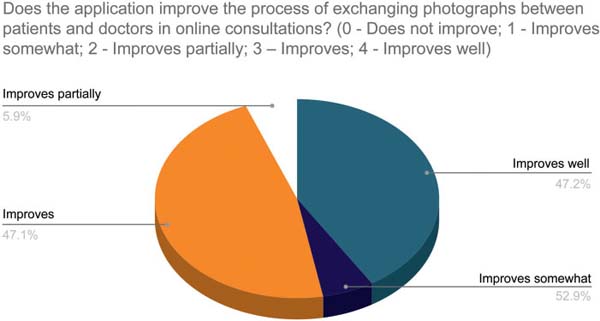
Additionally, 76.5% of the respondents rated their satisfac-tion with the tool as either very good or good. Most eval-uators (88.3%) agreed that the application effectively enhances the process of exchanging images between patients and doctors during online consultations (►Fig. 8).
The main suggestions to improve the application, as presented by users in item 5 of the interview (►Table 3), were as follows: the addition of a tab displaying the first doctor selected, as this information is no longer visible after choosing a professional; sending the doctor a notification each time a patient sends photographs; improvements in the registration and password process, as some users experi-enced difficulties; enhancement of the image-capture process, including better framing options and new masks for other body parts; provision of clearer guidance on the appropriate distance to take photographs; inclusion of a chat tool for doctors and patients, enabling the latter to send photographs directly from their galleries; implementation of image color, brightness, and contrast adjustments; selection of a more “eye-catching” logo; development of an iPhone (Apple Inc.) version of the application; and enabling the option to download photographs. These suggestions aimed at enhancing the user experience and functionality of the application.
In item 6 of the interview (►Table 3), the patients mentioned that they would pay between BRL 1.99 (USD 0.37, as for December 12, 2025) and 40.00 to use the application. The possibility of an annual subscription of up to BRL 100.00 was suggested, enabling doctors to make the platform available to their patients. One intervieweestated that they “would not pay a high amount as theycould continue taking photographs from WhatsApp at no cost.” Another interviewee emphasized that the proposal to send photographs confidentially added signif-icant value to the product and suggested a partnership with electronic medical record programs.
Usability test of the tool by doctors
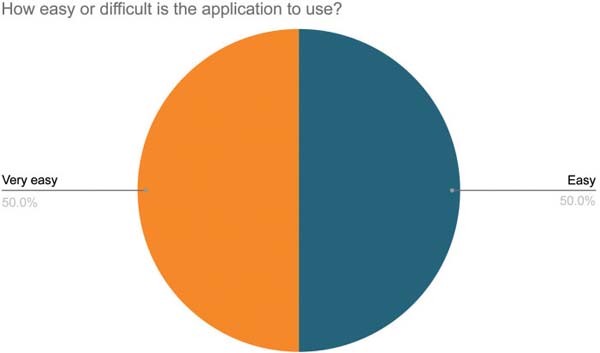
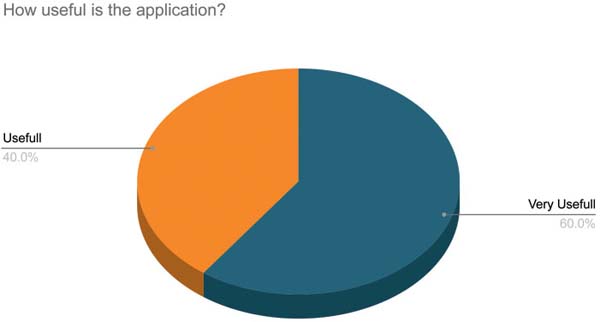
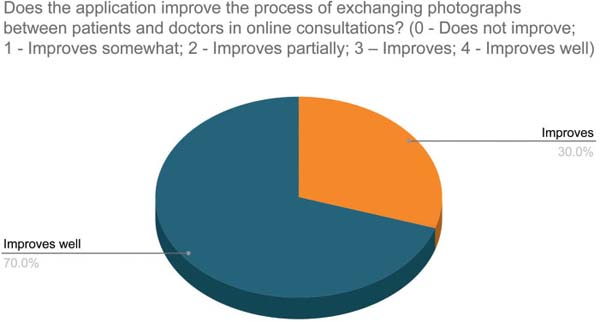
All doctors responded that using the application is easy or very easy (►Fig. 9). In total, 100% of the participants rated the application as useful or very useful (►Fig. 10). All respondents reported that the tools are very satisfactory (30%) or satisfactory (70%). In addition, all evaluators agreed that the application effectively enhances the image-exchange process between patients and doctors during online consultations (►Fig. 11). The main suggestions for application improvements presented by medical users in item 5 of the interview (►Table 2) were as follows: Implementation of new versions in English and Spanish; adding to the patient instructions tab the need to remove facial makeup, and state these instructions not only in text but also in graphics; inclusion of more body areas, such as the scalp and surgical scar; provision of the possibility of creating a photo montage in chronological order, enabling comparisons between before and after the procedure; mentioning compatibility with different device models; new photo-capture angles, such as profile and half-profile, to enable the subsequent creation of three-dimensional (3D) animations.
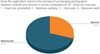
In item 6 of the interview (►Table 2), many doctors responded that they were unsure of the price to be paid for such a product. Some responses cited values such as BRL 50.00 per month or an annual subscription from BRL 60.00 to 120.00. Another suggestion was the possibility of charging within an integrationwith the electronicmedical record, as an additional tool. It was also suggested that versions with different features could be charged differently, one simpler and cheaper version, and another more complete and expensive version.
Discussion
The discovery stage revealed that image quality and data security are central concerns for doctors and patients. The Desk research and interviews provided a detailed under-standing of user needs and expectations.
The prototyping and validation of the prototype ensured that the application met the needs identified, including the creation of a high-quality image-capture system and a secure platform for data sharing, in accordance with the Brazilian General Data Protection Law.
The development of the application focused on ensuring usability and security, resulting in a tool that facilitates communication between patients and doctors, with a positive impact on telemedicine.
The present study confirms that patient photographs are an essential practice in telemedicine, providing an effective way to monitor health conditions and make clinical decisions remotely. Photoguide stands out by enabling patients to capture images with a proper technical standard, addressing the limitations found in the existing solutions.
The comparison with other commercially-available tools (►Table 1) showed that, while many applications focus on image capture by healthcare professionals, Photoguide offers a patient-centered solution with clear guidelines for image capture. This difference can significantly enhance image quality and, as a result, the effectiveness of remote care.
User suggestions highlighted the need for continuous improvements and the possibility of expanding the applica-tion’s functionalities. Future development may include new features, support for other platforms, and integrations with electronic health record systems.
Conclusion
Photoguide, a mobile application for telemedicine, was developed and delivered. It enables patients to capture technically-standardized photographs and securely share them with doctors. The tool developed addresses the needs identified in user research for sending images in telemedicine within the fields of Plastic Surgery and Dermatology. Positive user acceptance and the results of the usability test indicate that the application can be a valuable solution for remote medical practice, with potential for future expansion and improvement.
References
1. Jarvis C. Physical Examination and Health Assessment. Third Canadian Edition. North York, ON: Saunders/Elsevier Canada; 2018
2. https://doi.org/10.1016/j.mcna.2018.01.002
3. https://doi.org/10.1097/01.mlr.0000109125.00113.f4
4. https://doi.org/10.7326/0003-4819-144-10-200605160-00125
5. https://doi.org/10.1197/jamia.M2255
6. https://doi.org/10.1097/SAP.000000000 0000031
7. https://doi.org/10.1371/journal.pone.0121179
8. https://doi.org/10.1136/bmj.m930
9. https://doi.org/10.1001/archsurg.139.3.251
10. https://doi.org/10.1055/s-0040-1701254
11. https://doi.org/10.1001/jamainternmed.2020.5928
12. https://doi.org/10.1001/jama.2021.23332
13. https://doi.org/10.1111/ijd.13500
14. https://doi.org/10.1177/1932296817713761
15. https://doi.org/10.1097/DSS.0000000000001666
16. https://doi.org/10.1159/000 515158
17. https://doi.org/10.6061/clinics/2015(12)01
1. Postgraduate Program in Science, Technology, and Management Applied to Tissue Regeneration,
Universidade Federal de São Paulo (UNIFESP), São Paulo, SP, Brazil
2. Instituto de Ciências Matemáticas e de Computação, Universidade de São Paulo, São
Carlos, SP, Brazil
Financial Support
Address for correspondence Leonardo Montenegro Matos Albuquerque, Avenida Osvaldo Cruz 74, sala 504, Boa Vista, Ilhéus, BA, 45652–130, Brazil (e-mail: leomontenegro@gmail.com; plasticailheus@gmail.com).
Artigo submetido: 28/04/2025.
Artigo aceito: 25/09/2025.
Conflict of Interests The authors have no conflict of interests to declare.
Editor-in-Chief: Dov Charles Goldenberg.
 Read in Portuguese
 Read in English
 PDF PT
 Print
Print
 Send this article by email
 How to Cite
 Mendeley
 Pocket
 Facebook
 Twitter